
Your electrical panel distributes power throughout your home or commercial property. As electrical demand increases, an older or undersized panel may struggle to support modern appliances, lighting, HVAC equipment, workshop tools, EV chargers, and other electrical systems.
A panel upgrade is not always necessary, but certain warning signs should be evaluated by a qualified electrician. Here are seven common reasons to schedule an electrical inspection.
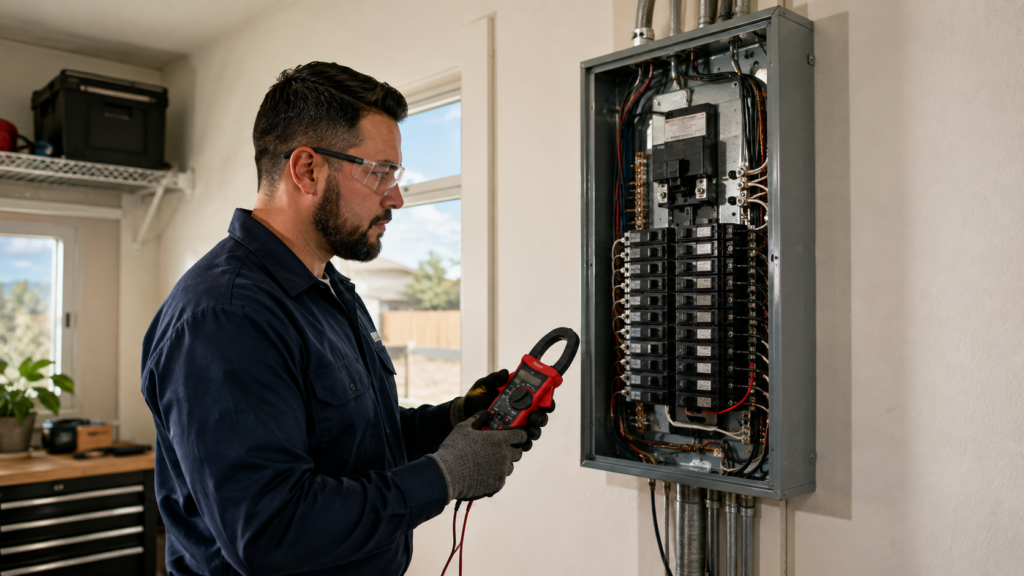
1. Circuit breakers trip frequently
Circuit breakers are designed to interrupt power when a circuit becomes overloaded or another unsafe condition occurs. An occasional trip does not necessarily mean the panel needs replacement.
However, breakers that trip repeatedly may indicate:
- An overloaded circuit
- A damaged breaker
- Faulty wiring
- An appliance problem
- Insufficient electrical capacity
Avoid repeatedly resetting a breaker without determining why it is tripping. A professional inspection can identify whether the problem is limited to one circuit or involves the electrical panel.
2. Lights dim or flicker
Lights may briefly dim when a large appliance starts, but frequent flickering or significant brightness changes should not be ignored.
These symptoms can be caused by loose connections, overloaded circuits, aging wiring, service issues, or equipment drawing more power than the system can comfortably provide.
Because loose electrical connections can create excessive heat, the cause should be investigated instead of covered up with temporary changes.
3. The panel feels warm, buzzes, or smells unusual
An electrical panel should not produce a persistent buzzing or crackling sound. It also should not smell like burning plastic or feel unusually hot.
If you notice smoke, sparks, a burning smell, or visible fire:
- Do not touch the panel
- Keep people away from the affected area
- Contact emergency services if there is a fire
- Call a qualified emergency electrician when it is safe to do so
Never remove the panel cover or attempt internal repairs unless you are properly trained and authorized.
4. There is visible rust, corrosion, or damage
Water and electricity are a dangerous combination. Rust, corrosion, moisture staining, damaged components, or missing panel covers can affect electrical safety.
Moisture may enter through damaged exterior equipment, improperly sealed conduit, plumbing leaks, condensation, or exposure to severe weather.
An electrician can evaluate the source of the moisture and determine whether affected components can be repaired or should be replaced.
5. You are adding major electrical equipment
Your electrical system should be evaluated before installing equipment that can significantly increase electrical demand, including:
- EV chargers
- Hot tubs or spas
- Electric water heaters
- HVAC equipment
- Backup generators
- Workshop machinery
- Commercial kitchen equipment
- Additional service panels
- Large outdoor lighting systems
Planning the electrical capacity before installation can reduce delays and prevent an unsuitable circuit or panel configuration.
6. The panel has no room for additional circuits
A full panel does not automatically require replacement. Depending on the equipment and installation, an electrician may recommend a properly designed subpanel or another approved solution.
However, crowded or improperly modified panels can make future maintenance more difficult. Adding breakers without confirming the panel rating, load capacity, and manufacturer requirements is unsafe.
A load calculation and equipment inspection will help determine the correct approach.
7. The electrical system is older or has an unknown history
Age alone does not determine whether an electrical panel is unsafe. Installation quality, equipment condition, maintenance history, electrical demand, and previous modifications all matter.
An inspection is particularly useful when:
- Purchasing an older property
- Remodeling a home or business
- Converting a building to a different use
- Adding substantial electrical loads
- Discovering undocumented wiring changes
- Experiencing recurring electrical problems
The inspection provides a clearer understanding of the existing system before additional work begins.
What happens during a panel evaluation?
An electrician may review:
- Panel and service ratings
- Breaker condition and compatibility
- Available circuit capacity
- Grounding and bonding
- Visible conductor condition
- Signs of overheating or corrosion
- Existing and planned electrical loads
- Relevant installation and safety requirements
After the evaluation, you should receive a practical explanation of the problem and the available repair or upgrade options.
Plan electrical upgrades before problems interrupt the work
Electrical panel problems can affect safety, comfort, equipment, and business operations. Early evaluation makes it easier to plan the scope, timing, and required shutdowns.
CB Electric, LLC provides residential and commercial electrical services in Amarillo and surrounding areas of the Texas Panhandle. Contact our team to discuss panel changes, service upgrades, new equipment, or recurring electrical problems.
Request a free quote or call 806-699-1020 to discuss your project.